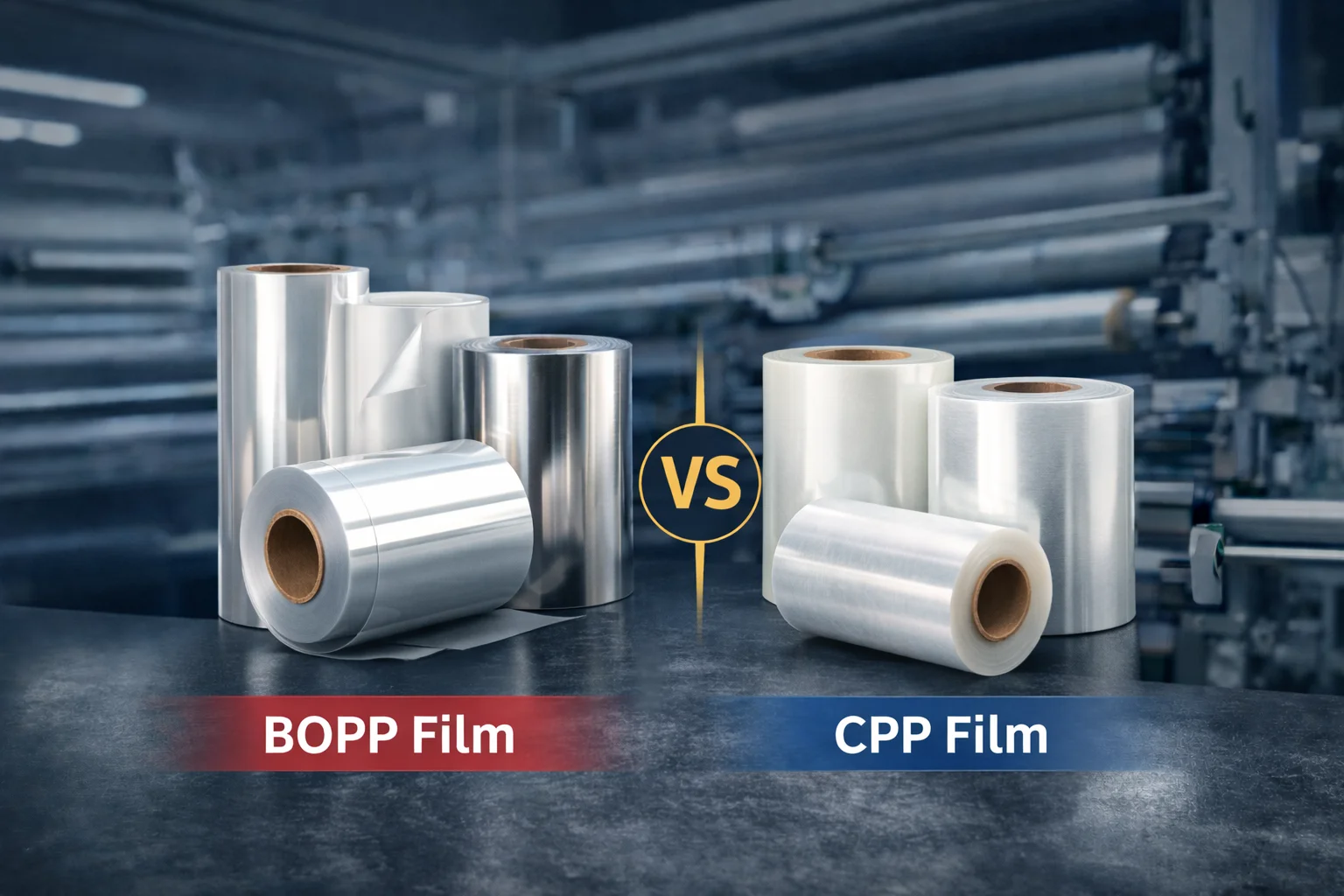
One of the most frequently asked questions in the packaging industry is the difference between BOPP and CPP films. Both film types offer flexible packaging solutions, but they differ significantly in terms of technical specifications and application areas.
BOPP films offer high mechanical strength and gloss thanks to their biaxially stretched structure. These properties make them particularly preferred for products where shelf visibility is important.
CPP films, on the other hand, are produced using a casting method and have a softer structure. This allows for more stable performance at low temperatures and provides flexibility in packaging lines.
From a printing perspective, both film types offer high print quality. However, BOPP films stand out, especially in designs requiring high gloss and clarity.
In terms of heat sealing properties, CPP films can operate over a wider temperature range. This provides an advantage in automated filling and fast packaging processes.
BOPP films offer a cost advantage due to their low density. They also maintain the product's shape better thanks to their rigid structure.
CPP films, on the other hand, are preferred, especially in food packaging, due to their soft texture and high transparency. It is frequently used in products such as pasta, legumes, and baked goods.
In laminated structures, both film types can be combined with different layers to create high-performance packaging. The choice should be made according to the product's shelf life and usage conditions.
The speed of the production line and the type of machine are also important factors affecting film selection. The right film directly increases efficiency in production.
Five Star Packaging offers manufacturers the right film alternatives for the right application with both BOPP and CPP film solutions.